
We are now nearing the end of my workpackages for the Augmented Humans project! So happy to share that my full research paper on Designing Tiny Robots will be published at Mindtrek Academic Conference in October 2024. I’ll provide the full paper reference once it’s gone through the final publication process.
The project centred on developing participatory design workshop methodologies and tools to assist organisational leaders and AI technology developers in developing more effective, human-centred AI systems. The key research problem I was working with there is the well known low returns on investment from AI technologies that stem from ineffective development, integration and enablement.
My participatory design tools and methods include the following ways in which we can include all stakeholders in the design and delivery of AI enabled systems in the workplace:
A set of 3×8 conversation cards that explore AI functional design concepts, provocations on the dark side of AI, and human flourishing in the age of AI.
A design card game called Creating Tiny Robots that engages stakeholders in creating rapid protypes of AI systems using four challenge cards of Technology, Touchpoints, Experience and Bugs.
An end-to-end design sprint process that utilizes the conversation cards and the Tiny Robots design card game in co-creation exercises. I have named this the “Creating Tiny Robots” design process for co-creating AI systems designs.
I’ve added some pictures below from a recent workshop to give you some idea of the engaging, creative and playful interaction involved in extending stakeholder understanding and involvement in the co-creation of AI technologies. I ran five workshops across the the USA, Europe, Nordics and Australia with over 90 participants to develop, test and iterate these tools. Since the paper was produced, I ran a demonstration exercise for my colleagues at the University of Oslo recently who are now looking to further test and develop the tools with their information systems students. Two other universities in Sweden also now have these tools, so the development will be ongoing.
This is why I love research – building, extending, and sharing knowledge and know-how with all stakeholders, especially when the unintended consequences of ill-designed technologies can have deep and devastating impact on society. More detailed research papers will come out of this module, so watch this space!
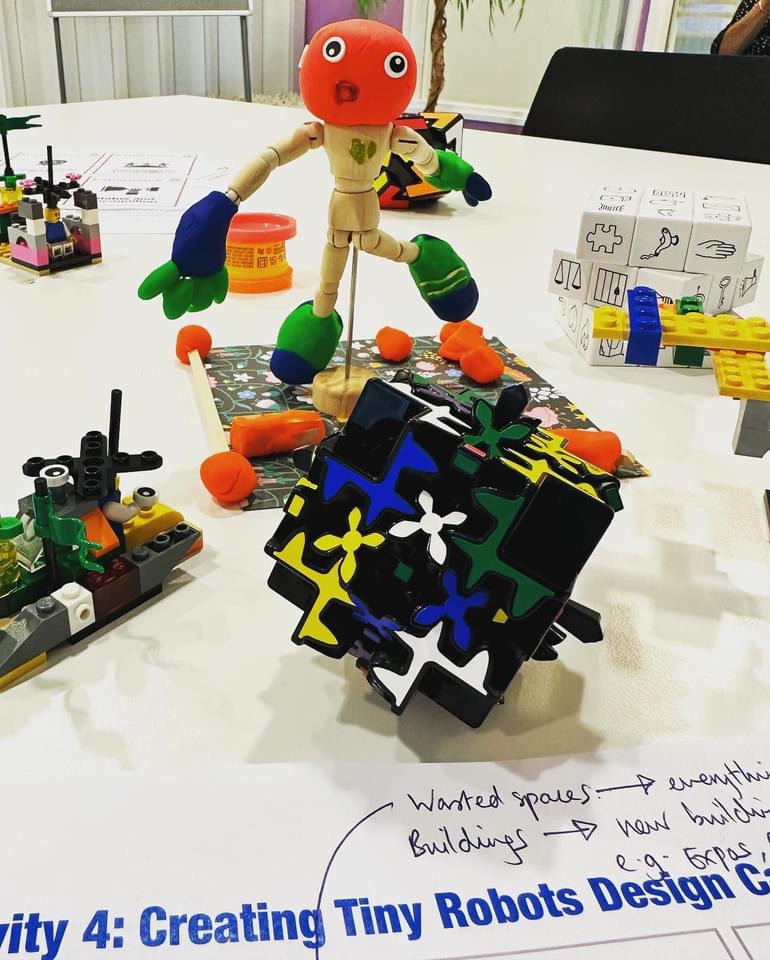
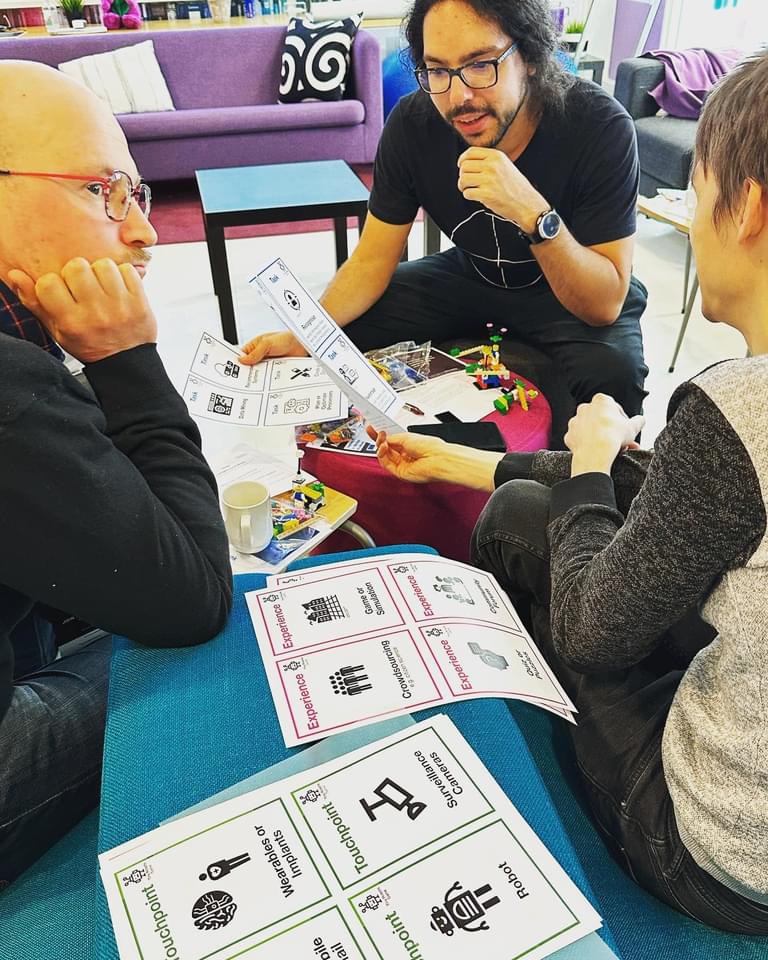
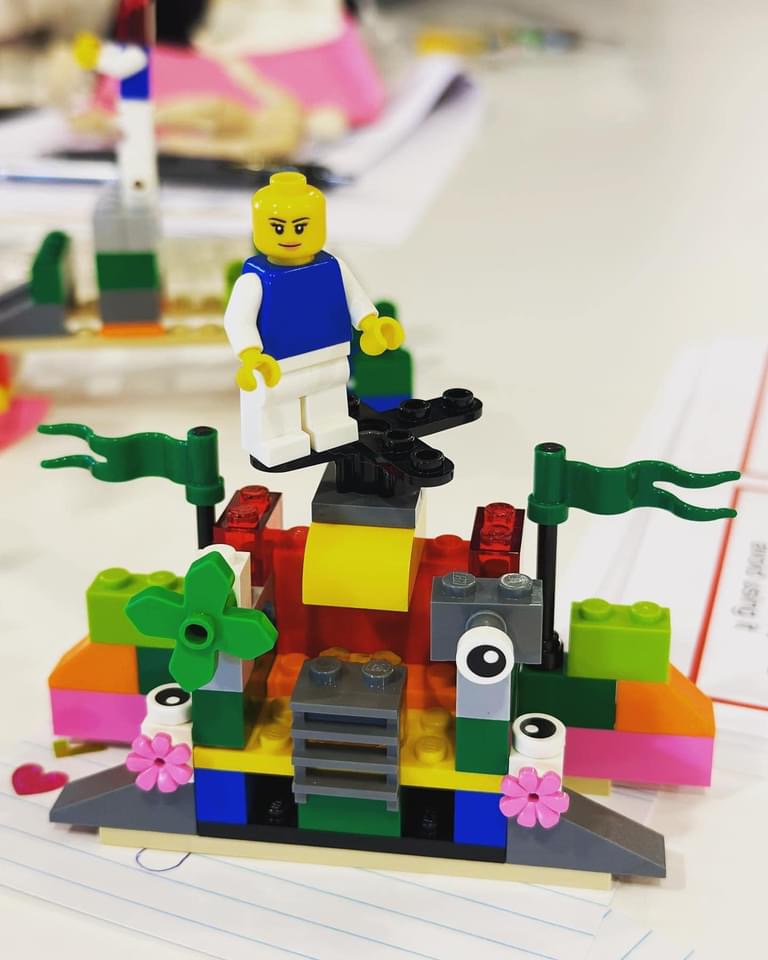
A summary of the paper abstract and conclusions from the upcoming Mindtrek publication are as follows:
Abstract
This work examines the potential of creative and playful participatory methodologies to advance collaborative stakeholder design of intelligent information systems. Our work responds to widespread industry criticism of unethical practices, unintended negative consequences of ‘black box’ algorithmic decision making, and organisations falling short in earning tangible business value through AI investments. We present prototype interactive AI design cards and a collaborative AI design sprint process called Desing Tiny Robots targeted at alleviating the limitations with the current generation of intelligent human-machine systems. We argue that collaborative AI system design may account for a fuller range of the socio-technical interactions between stakeholders and thereby improving AI technology design, effectiveness, and adoption.
Conclusions
Despite the potential of AI technologies to improve business performance, it has been widely reported as delivering limited returns on investment. This has been largely attributed to organisational enablement issues as well as technology adoption issues among system users. One way to manage these limitations is to engage a wide range of stakeholders in the AI technology co-creation process that may account for a fuller range of the socio-technical interactions between stakeholders and thereby alleviate issues in relation to technology design, effectiveness and adoption. In this study we propose a set of AI design cards and an AI design sprint process that can be used by researchers, organisational leaders, project managers to better collaborate with stakeholders in developing more robust human-centered AI technology designs and enablement strategies. The greater challenge however remains that the current complexity of the AI software development value-chain, and the high complexity in AI concepts is still challenging collaborative approaches to AI system design with a wide range of stakeholders.
Funding Statement
This project has received funding from the European Union’s Horizon 2020 research and innovation programme under the Marie Sklodowska-Curie grant agreement No 101023024 for Augmented-Humans.


 Augmented Humans